
Mold Testing
The Difference Between Mold Inspection and Mold Testing
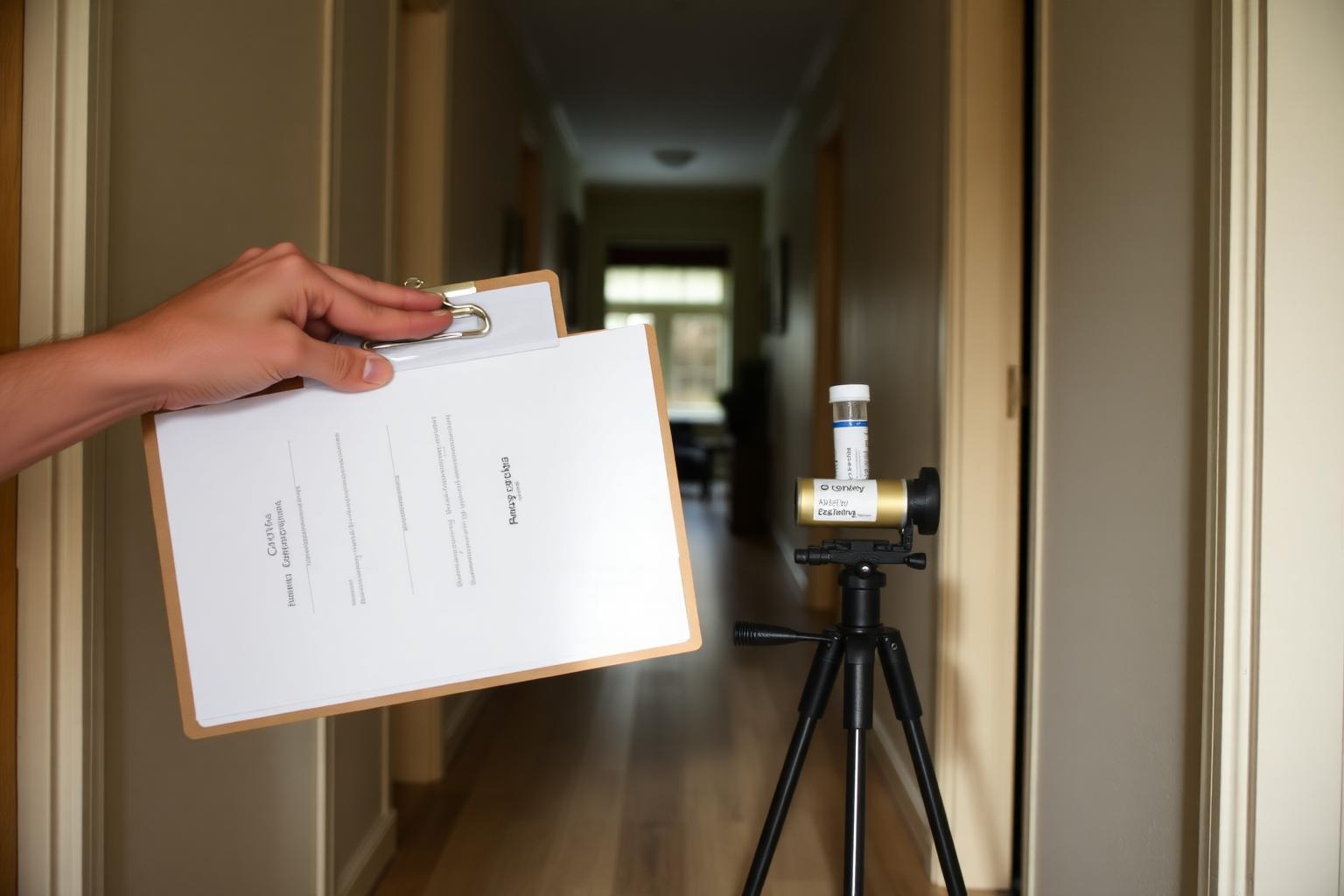
When clients call us, they often ask "How much for a mold test?" The honest answer is: it depends on what you actually need, because mold inspection and mold testing are different services. Here's how to think about it.
Mold inspection
An inspection is the *investigation* — a trained inspector physically assessing your property. This includes:
- Visual examination of all accessible areas - Moisture meter readings on suspect surfaces - Thermal imaging - HVAC visual assessment - Conversation about history, symptoms, and concerns - Documentation with photos - Professional judgment about likely causes
The output is a report describing what was observed, what was measured, and what the inspector concludes.
Mold testing
Testing is *laboratory analysis* of physical samples collected during inspection. This includes:
- Air samples — pumps draw a measured volume of air through cassettes that capture spores - Surface samples — tape lifts or swabs collected from suspect material - Bulk samples — pieces of material sent for analysis - Specialized testing — ERMI, qPCR, mycotoxin screening when appropriate
The output is laboratory data — spore types and counts, species identification, comparison data — that requires interpretation in the context of the inspection.
Why both usually matter
Testing without inspection is useless. Lab data has no meaning without understanding the home's specific conditions. Spore counts vary by season, weather, occupancy, and HVAC operation. The same numerical result might be unremarkable in one home and serious in another.
Inspection without testing is incomplete. You might see visible mold, but you don't know its species, you don't know what's airborne, you don't have baseline data for comparison, and you have nothing to verify remediation against.
When testing-only might make sense
Limited testing-only scenarios:
- Post-remediation clearance testing of a known remediated area - Periodic monitoring of a previously assessed space - Specific symptom investigation where the home has been recently inspected
In each case, the testing is layered on top of existing inspection knowledge.
When inspection-only might make sense
Inspection without testing is reasonable when:
- Visible mold is obvious and the question is just "how bad and how to fix" - Pre-purchase due diligence with no specific concerns and tight budget - Initial assessment where testing decisions can be made after walkthrough
In most cases though, the combination produces better information.
What HBH typically provides
Our standard residential inspection includes: - Full walkthrough and assessment - Thermal imaging - Moisture mapping - HVAC visual inspection - Indoor and outdoor air samples (usually 2-4 indoor plus 1 outdoor) - Lab analysis by accredited laboratory - Written report with interpretation - Remediation guidance if needed
For specific concerns, we add additional sampling — bulk samples, surface samples, VOC testing, ERMI dust analysis, etc.
How to evaluate inspection proposals
Red flags in mold inspection quotes:
- **Suspiciously low prices** ($200-$300 for "full inspection") usually mean rapid visual-only assessments without lab work - **No mention of laboratory analysis** — testing without lab work is just collecting samples - **No outdoor control sample** — you can't interpret indoor results without comparison - **Same company does inspection and remediation** — major conflict of interest - **Pressure sales tactics during the inspection** — legitimate inspectors don't sell - **No written report** — verbal results aren't useful for decisions, insurance, or transactions - **No credentialed inspector on staff** — look for IAQA membership, CIE, CMC, CIEC certifications
What good service costs
Real, comprehensive mold inspection with lab analysis on Long Island typically ranges $500-$1,200 depending on home size and sample count. Larger homes, more samples, or specialty testing increase cost. The price reflects real lab fees, real time on site, and real professional expertise.
It's not cheap. But it's a fraction of what bad information costs.
**Need an inspection?** Call HBH at (631) 774-6502 for honest pricing and scope.
Keep Reading
Home Systems
Bathroom Mold Prevention: A Long Island Homeowner's Guide
Bathrooms are ground zero for mold in Long Island homes. Here's how to stop it before it starts — from ventilation to grout.
Seasonal
The Long Island Fall Mold Prevention Checklist
Autumn is the most important — and most overlooked — season for mold prevention on Long Island. Use this checklist before winter sets in.